
Owning a custom pool in the St. Petersburg area is a dream come true—but keeping that dream in top shape takes more than a net and a filter. It requires a basic understanding of pool chemistry, the not-so-secret formula that keeps your water clean, safe, and crystal clear. At Winway Pools, we’ve been building and maintaining custom pools in the St. Petersburg area for over 20 years. We know firsthand that balanced pool water isn’t just about appearance—it’s essential to comfort, health, and long-term protection of your investment.
So, what goes into pool chemistry?
Why Pool Chemistry Matters
Balanced water chemistry does four critical things:
- Keeps the water safe to swim in by killing harmful bacteria and viruses
- Prevents damage to your pool’s surface and filtration equipment
- Reduces eye and skin irritation from harsh or poorly balanced chemicals
- Maintains water clarity so your pool always looks sparkling and inviting
Whether you’re taking a quick dip after work or hosting the ultimate backyard party, your pool’s water chemistry is working behind the scenes to make sure every swim is a good one.
The Key Players in Pool Chemistry
Here are the five major chemical components that work together to keep your pool in balance:
Chlorine – Your Pool’s Primary Sanitizer
Chlorine is the backbone of pool sanitation. It kills bacteria, algae, and other microorganisms that can pose health risks. Without proper chlorine levels, your pool can quickly become a breeding ground for contaminants, even if it looks clean.
- Target range: 1–3 parts per million (ppm)
- Pro tip: Too much chlorine can lead to strong chemical smells and skin irritation. Too little, and the water may turn cloudy or green from algae growth.
pH – The Power of Hydrogen
pH measures the acidity or alkalinity of the water. This matters because it directly affects how well your chlorine performs.
- Ideal pH range: 7.2–7.8
- A low pH (acidic) can corrode metal parts and irritate eyes and skin.
- A high pH (alkaline) can cause scaling and make chlorine less effective.
Keeping your pH in range is the cornerstone of balanced pool chemistry.
Alkalinity – The Stabilizer Behind the Scenes
Total alkalinity acts as a buffer to help keep pH levels stable. If your alkalinity is too low, your pH can swing wildly. If it’s too high, it can make the pH difficult to adjust.
- Recommended range: 80–120 ppm
Alkalinity keeps your water chemistry more predictable, which makes regular maintenance much easier.
Calcium Hardness – Protecting Pool Surfaces and Equipment
Calcium hardness refers to the amount of dissolved calcium in your pool water. Both low and high levels can cause serious issues.
- Target range: 200–400 ppm
- Too low? Your water becomes aggressive and may start leaching calcium from tile grout, plaster, or concrete, leading to pitting or etching.
- Too high? Scale may form on your pool walls and plumbing, reducing efficiency and increasing maintenance needs.
Cyanuric Acid – Your Pool’s Sunblock for Chlorine
Chlorine doesn’t last long under the hot Florida sun. That’s where cyanuric acid (CYA), also called stabilizer, comes in. It helps protect chlorine from being broken down by UV rays.
- Optimal level: 30–50 ppm
- Without CYA, your chlorine can degrade in just a few hours of sunlight exposure.
- With too much CYA, your chlorine becomes less effective, so balance is key.
Maintaining Proper Pool Chemistry
Keeping your custom pool balanced doesn’t have to be complicated. A few simple routines go a long way:
Test Regularly
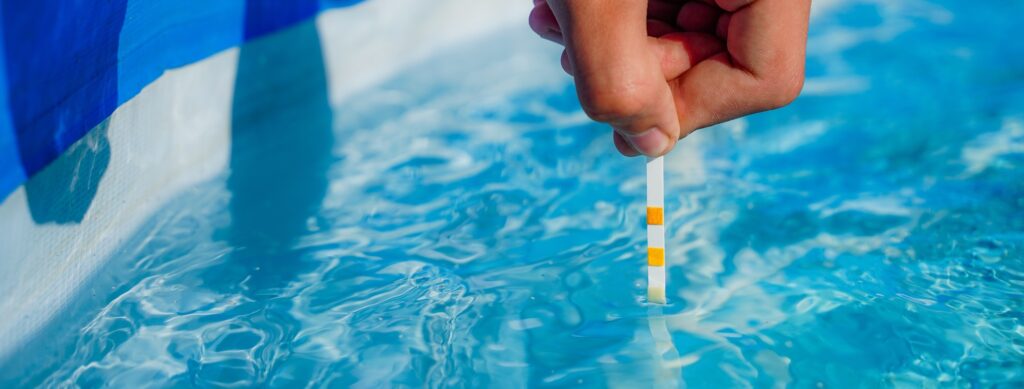
Use test strips or a liquid test kit 2–3 times a week, especially during peak swimming season. Monitor chlorine, pH, alkalinity, and calcium hardness to ensure nothing’s drifting out of range.
Adjust as Needed
When you spot an imbalance, take action. Add chemicals such as pH increasers or decreasers, chlorine tablets, or alkalinity adjusters to bring levels back to the ideal range.
Filter and Circulate
Even perfectly balanced water can go bad if it’s not moving. Your pool’s filtration system should run 8–12 hours a day, depending on usage and weather. Clean your filter regularly and ensure strong water circulation to prevent dead zones where algae can grow.
Custom Pools Deserve Custom Care
At Winway Pools, we design and build pools that match the beauty and lifestyle of St. Petersburg homeowners, and we want your pool to stay as pristine as the day it was finished. Understanding the basic science of pool chemistry is one of the best ways to keep your pool in peak condition for years to come. If you ever feel overwhelmed, don’t worry. We offer maintenance plans and expert guidance to help you protect your investment with ease.
Looking to build your dream pool or need help with maintenance?
Contact Winway Pools today—we’ve been building and caring for pools in St. Petersburg for over 20 years, and we’re here to help you enjoy every swim.