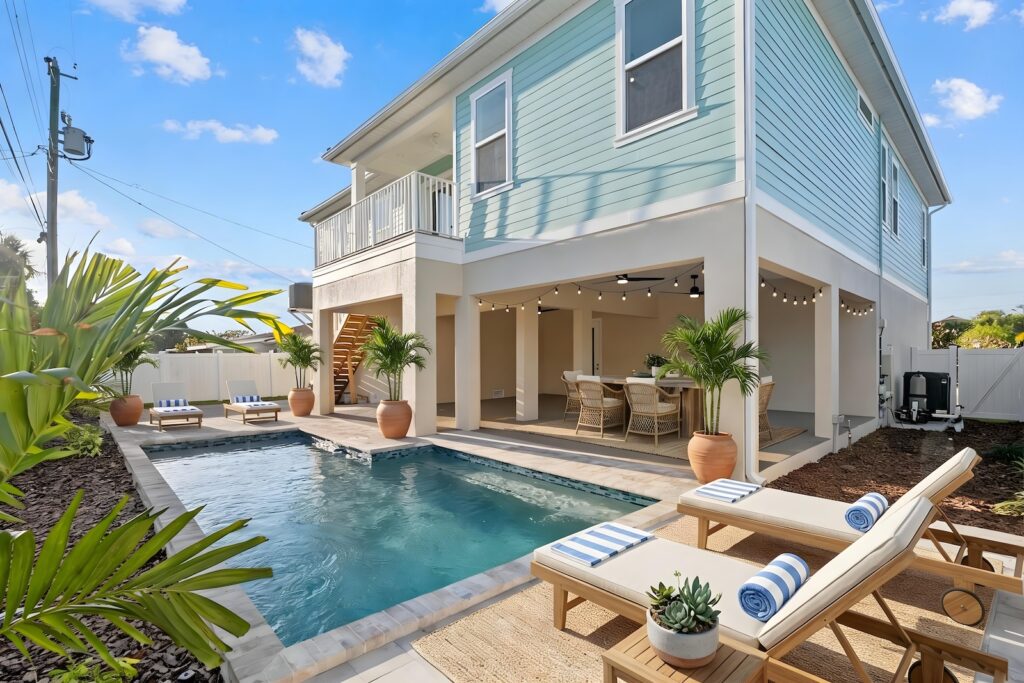
One of the first questions that homeowners ask our pool design professionals at WinWay Pools is, “How much does a custom pool cost?”
The answer isn’t always simple because a custom pool isn’t a one-size-fits-all product. It’s designed around your property, your lifestyle, your design preferences, and the specific site conditions in your backyard.
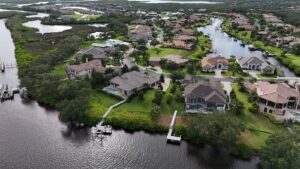
This is especially true in Pinellas or Manatee County, Florida, where pool construction costs may include lot access, assessment of drainage and soil conditions, equipment placement, and local permitting and HOA requirements. A pool in St. Petersburg may have different site challenges than a pool in Parrish, Bradenton, or Palmetto.
Understanding these cost factors can help you plan with confidence. While every project requires a personalized design and estimate, this guide explains the key features and decisions that can influence the price of a new custom pool in Florida.
How Much Does a Custom Pool Cost in Florida?
Your inground pool cost depends on several factors, including size, shape, materials, finishes, decking, site conditions, and which features you want.
For example, HomeGuide reports that inground pools in Florida commonly range from about $35,000 to $120,000, depending on size, material, features, and site conditions. Other Florida-specific cost guides place many custom pool projects in the $60,000 to $150,000+ range, with luxury features, spas, hardscapes, and enclosures increasing the final investment.
These are broad ranges because the final price of a custom pool is influenced by the entire outdoor environment. For more examples of typical costs for luxury pools, read our blog, How Much Does a Custom Pool Cost in Florida?
Here are seven key considerations that affect the costs of building a custom pool.
1. Site Conditions and Location Impact Pool Costs
Before design details are finalized, your pool builder needs to understand your property. This is why an at-home consultation and site evaluation are so important. At WinWay Pools, this process includes evaluating how equipment can access the site, where the pool can be placed, how drainage will be managed, and what local requirements may apply.
Here are just a couple of key considerations.
Backyard Accessibility for a New Pool
If excavation equipment can reach the backyard without major obstacles, the pool construction process is usually more straightforward. But limited site access can increase costs. Smaller lots, narrow side yards, mature landscaping, fences, elevation changes, or existing outdoor structures may require specialized equipment, additional labor, or more careful staging.
Soil and Ground Conditions
Florida’s Gulf Coast includes a variety of soil and site conditions. Sandy soils, clay pockets, drainage concerns, and waterfront conditions can all affect the way a pool is engineered and constructed. If the site requires additional preparation, soil stabilization, drainage work, or structural planning, those items can influence the overall cost.
Drainage, Grading, and Water Management
Heavy rain, flat lots, nearby seawalls, and waterfront conditions can all affect how water moves across your Florida property. Some pool projects require additional grading, drainage planning, retaining walls, or other water management solutions. These elements may not be as exciting as tile or lighting, but they are essential to creating a pool that functions well over time.
Permits, Engineering, and Local Regulations
Residential pool permit requirements can include surveys showing the proposed pool and equipment location, setback information, engineered plans, equipment specifications, and safety barrier compliance. Florida also has residential pool safety barrier requirements, and local municipalities and HOAs may have their own review processes.
This is where working with a local custom pool builder matters. WinWay Pools builds pools across the St. Petersburg and Clearwater area, as well as in Parrish, Bradenton, Palmetto, and nearby waterfront communities, and each involves different permitting and regulatory considerations.
Waterfront and Elevated Properties
Waterfront/coastal properties and elevated homes are common throughout Pinellas County and Manatee County. These properties can create beautiful outdoor settings, but they may also require more planning when building a custom pool. Considerations include:
- Access and engineering requirements
- Equipment placement
- Seawall or setback considerations
- Elevation changes
- Stormwater movement
These conditions do not necessarily prevent you from building a pool. They simply mean your pool should be designed around the property from the beginning.
2. Pool Size, Shape, and Depth Affect Pricing
When it comes to costs, pool size matters. A larger pool generally costs more because it requires more excavation, more steel and concrete, more plumbing, more interior finish material, more water, and often larger equipment systems.
Note that while a compact plunge pool may be more cost-effective than a large resort-style pool, size is only one part of the cost equation. A smaller pool with premium finishes, a spa, a screen enclosure, and extensive decking may still cost more than a larger, simpler pool.
How Shape Affects Cost
Geometric pools are often more cost-effective because they are easier to form, engineer, and construct. Rectangular, clean-lined pools also work well with modern Florida homes, creating a sleek, luxury look.
Freeform pools, custom shapes, curves, and more complex layouts can require additional design and construction labor. They may also affect the amount of decking, coping, tile, and plumbing needed. This doesn’t mean you should avoid custom shapes. If you and your pool builder are aligned in the design phase, you can avoid surprise costs down the road.
Why Depth Matters
Deeper pools require more excavation, more structural support, more interior surface area, and more water volume.
Your pool’s depth should be based on your lifestyle. Common pool depth options include:
- Shallow play pools for lounging and young families
- Sport pools with shallower ends and a deeper middle
- Lap pools for exercise
- Compact plunge pools
- Resort-style pools with multiple activity zones
3. Pool Materials Significantly Impact Pool Costs
The materials you choose can significantly affect the look, feel, durability, and cost of your pool.
Vinyl and fiberglass materials are generally more budget-friendly, but concrete or gunite pools are popular because they can be shaped to fit your yard, home, and desired features. Your pool’s finish also affects your pool costs. But keep in mind that your pool’s interior finish affects both appearance and long-term performance. Common options include:
- Standard plaster
- Quartz finishes
- Pebble finishes
- Premium aggregate finishes
Pool Decking is another major cost factor. Your pool deck is where people lounge, walk, entertain, and gather, so it plays a big role in the overall experience. Common pool deck materials include:
- Standard concrete
- Decorative or stamped concrete
- Concrete pavers
- Travertine
- Natural stone
To get an idea of material costs, travertine pavers can cost from about $15 to $27 per square foot, depending on project size, labor, and scope, according to HomeAdvisor. So your deck material and square footage can make a big difference in total project cost.
Additional hardscape features, such as custom walkways, seating walls, raised planters, and fire features, will also affect the cost of your pool.
4. Water Features, Lighting, and Luxury Upgrades Add to the Experience
A custom pool is about more than swimming. The right features can make your backyard feel like a private resort.
Popular pool water features include:
- Sculptured waterfalls
- Sheer descents and rain curtains
- Deck jets
- Bubblers
- Spa spillovers
Water features can add visual movement, relaxing sound, and a luxurious feel. They can also add cost because they may require additional plumbing, pumps, equipment, structural support, and design work.
For example, if you do a quick search online, you’ll find that custom deck jets can run from about $1,500 to $4,000, sheer descents around $2,500 to $6,000, bubblers and laminar jets around $1,000 to $3,000, and larger waterfalls or rock features from about $8,000 to $30,000, depending on design complexity. Actual pricing depends heavily on the design, materials, plumbing, and site conditions.
Tanning Ledges and Baja Shelves
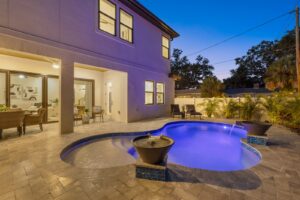
Tanning ledges, also called sun shelves or Baja shelves, are one of the most requested luxury pool features at WinWay Pools. These shallow lounging areas are ideal for chairs, umbrellas, young children, or simply relaxing in a few inches of water.
They can affect costs by adding square footage, requiring specialized forming, and potentially including bubblers, umbrella sleeves, specialty tile, or accent lighting. For many homeowners, the added cost is worth it because a tanning ledge makes the pool more usable for entertaining and family time.
Pool Lighting and Ambiance
Lighting can completely change how your pool feels after sunset, especially in Florida, where outdoor living often extends into the evening. Pool lighting options may include:
- Color-changing LED pool lights
- Accent lighting
- Landscape lighting
- Path lights
- Uplighting for palms and plantings
- Outdoor entertainment lighting
Cost depends on the number of fixtures, wiring, controls, automation, and the complexity of the installation. Lighting is often easier (and less expensive) to plan during the initial build than to add later.
5. Adding a Spa Increases Cost, But Also Increases Enjoyment
A spa or hot tub is one of the most common upgrades that significantly affects pool pricing, but it adds significant value by enhancing your enjoyment of your home’s outdoor space.
For example, you may opt for an attached spa that is integrated into the pool design, which could also include a spillover into the pool. Or you may prefer a stand-alone spa that’s separate from the pool area and designed as its own relaxation zone.
Spa cost factors typically include:
- Excavation, plumbing, and equipment
- Heating requirements
- Jets and controls
- Raised walls or spillover details
- Interior finish and tile
- Structural design
Pool industry cost guides often place attached spas in the $8,000 to $25,000+ range, with more elaborate raised, spillover, or luxury spas costing more. Adding a spa to an existing pool later can be more complex (and more expensive) than planning it with the original pool design.
6. How Pool Equipment and Technology Impact Costs
Pool equipment may not be the first thing homeowners think about, but it does affect comfort, maintenance, and operating costs. Here are some cost factors to consider.
- Filtration and circulation: Your pool system may include cartridge filters, sand filters, pumps, valves, plumbing, and sanitation equipment. The right setup depends on your pool size, features, usage, and maintenance preferences.
- Automation systems: Smart pool controls make it easy to manage lighting, pumps, schedules, water features, heating, and spa settings from a phone or control panel. (Automation usually adds upfront cost, but many homeowners appreciate the convenience, especially when the pool includes multiple features.)
- Pool pumps for efficiency: Variable-speed pumps and energy-efficient equipment can cost more initially, but they may help reduce operating costs over time. Additional technologies may include automated cleaners, UV sanitation systems, or saltwater systems, which can help reduce maintenance costs.
Pool Heating and Cooling Options
Even in St. Petersburg, Clearwater, and the surrounding areas, winter nights can get chilly. And many area homeowners want cooling options for hot summer stretches. This type of equipment might include electric heat pumps, gas heaters, pool chillers, and combination heating and cooling systems.
HomeAdvisor reports that pool heater installation typically averages around $3,000, with a common range of $1,831 to $4,255, depending on pool size, heater type, labor complexity, and utility connections. Larger pools, gas line needs, electrical upgrades, or more advanced systems can increase the cost.
7. Pool Screens and Enclosures Add Long-Term Value
Pool screens and enclosures are one of the most popular additions for Florida homeowners. A screen enclosure can help:
- Reduce leaves and debris.
- Protect against insects.
- Add shade and improve overall comfort.
- Make the pool area more usable year-round.
- Reduce some cleaning and maintenance needs.
The cost of a pool enclosure depends on size, height, materials, roof style, screen type, and structural/engineering requirements. Florida enclosure cost guides place many pool enclosures in the $6,000 to $15,000 range, while larger or more custom enclosures can cost more.
In coastal Florida, enclosures may also need to account for wind-load requirements, permitting, and local building codes. It helps to plan the enclosure early in the design process instead of treating it as an afterthought.
Final Pool Cost Considerations: Timing, Planning, and Project Scope
Florida pool construction can happen year-round, but demand can still affect scheduling and pricing. Here are some cost considerations around your new pool’s timing, planning, and project scope.
Combining Projects Can Reduce Costs
Working with your pool builder to plan your pool, spa, screen enclosure, hardscaping, and landscaping together can save costs. For example, combining project elements can help avoid duplicate work and create a more cohesive design.
It’s more cost-efficient to plan plumbing, electrical, decking, drainage, and outdoor living features during the initial build than to add them later. This does not mean every feature must be built at once, but the overall vision should be discussed early.
Budget Priorities
A custom pool design should balance your wish list with your budget. Some homeowners prioritize a spa. Others care most about decking, water features, lighting, or a screen enclosure. Some want a compact pool with premium finishes, while others want a larger family pool with a simpler feature package.
Your custom pool builder can help you understand where your budget will have the most impact.
The Best Way to Understand Pool Pricing Is Through a Custom Consultation
Pool pricing is influenced by far more than size. Site conditions, materials, shape, depth, decking, water features, spas, technology, and outdoor living amenities all contribute to the final investment.
The best way to understand your pool cost is through a personalized consultation and design process. For example, our team at WinWay Pools can evaluate your property, listen to your goals, and help you understand which features will add the most value to your pool and your lifestyle.
What’s more, a custom pool may be more affordable than you think. If you’re ready to explore new pool ideas and costs, contact us today to schedule your consultation. We can provide a custom pool design and estimate tailored to your property, your vision, and the way you want to enjoy outdoor living in Florida.